
Startup story #16 - BIMINI Biotech
USI Startup Centre
24 February 2025
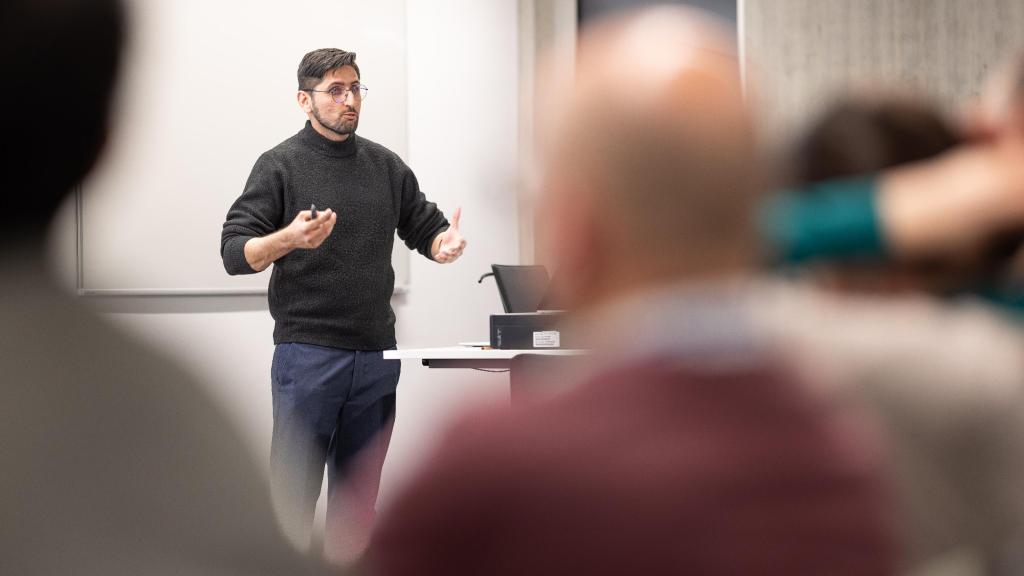
Most existing treatments for blood cancers focus on well-established molecular targets, leading to intense competition in an already crowded oncology pipeline. BIMINI Biotech approach is based on a first-in-class proprietary portfolio of small molecule Wiskott Aldrich Syndrome Protein (WASp) modulators, developed in collaboration with the Institute of Oncology Research (IOR) in Bellinzona. In this short interview, Digvijay Gahtory, co-founder and CEO, talks about their innovative solution and the challenges they are facing.
How did the story of BIMINI Biotech begin, and what role does IOR play in BIMINI’s development?
Everything originated from a different project that emerged from a university in the Netherlands, however, early in the process, we encountered several challenges that made us reconsider our strategy. At that point, we had two choices: shut down the company and return the remaining capital to shareholders or continue in drug development with a new direction. It was then that we came across a patent filed by the research group of Francesco Bertoni, head of the Lymphoma Genomics Group at the Institute of Oncology Research (IOR) in Bellinzona, which presented highly promising data. We got in contact with Francesco and immediately felt a strong synergy and complementary capabilities between our teams. This marked the beginning of what we now call BIMINI Biotech.
How does your solution work?
BIMINI Biotech follows a first-in-class approach, targeting a molecular mechanism that no other company has previously explored, with a primary focus on blood cancers, specifically lymphomas and leukaemia. BIMINI Biotech’s proprietary portfolio of WASp modulators, developed in collaboration with IOR, consists of novel molecules targeting the WASp, an actin nucleation related protein, expressed exclusively in hematopoietic cells. By inhibiting the up regulation of WASp, our approach aims to reduce the invasiveness and proliferation of tumour cells, offering an innovative therapeutic strategy.
What is one of the major challenges that you are dealing with?
A major challenge we are facing in drug development is achieving complete selectivity, ensuring that our compound effectively targets cancer cells while minimizing unnecessary interaction with healthy cells. Balancing potency and specificity is crucial to ensure that they bind effectively to the intended target. Currently, we are investigating these factors to gain a deeper understanding into the selectivity mechanism of our compounds.
What are your next milestones?
We are in the early stages of development for our compounds, and over the next two years, we aim to progress to the Investigational New Drug (IND) application stage. This step will provide strong evidence of safety, selectivity, and therapeutic potential, allowing us to transition from preclinical to clinical trials, where we aim to begin testing our treatment in human patients.
3 quick questions to wrap it up:
- If you were not in the biotech sector, what would you be doing? I have a passion for history, so perhaps an academic career in that field.
- What is your number one dream? To lead a successful biotech company that saves lives and brings meaningful changes to patients.
- If you could have a conversation with anyone in history, who would it be? Nelson Mandela, without a doubt.