
Startup Story #21 - Gondola
USI Startup Centre
31 March 2025
Invasive treatments requiring long administration times have long been the default approaches for addressing walking and balance impairments caused by neurological disorders. Gondola, a pioneering MedTech startup, is working to change this thanks to the Gondola® medical device, which delivers the AMPS (Automated Mechanical Peripheral Stimulation) treatment, a cutting-edge approach supported by several scientific and clinical studies. This innovative solution is non-invasive, easy to use, and provides significant improvements in walking function within minutes. In this brief interview, Francesco Cecchini, co-founder and CEO, takes us through his startup journey and the evolution of the project.
How did the Gondola story begin?
The first idea came from my co-founder, Stefano, a neurorehabilitation expert who had been working on advanced rehabilitation techniques for years. He saw that by stimulating the body in specific ways, particularly through targeted stimulation on the feet, patients with neurological disorders could regain control over certain motor functions and reduce symptoms. When I met Stefano, I had no background in life sciences and, to be honest, I was a bit sceptical, but everything changed when he showed me a video of a Parkinson’s patient before and after receiving the treatment, where the person regained the ability to walk almost normally. I was astonished. That moment pushed me to talk to doctors, researchers, and experts in the field to understand the potential of this innovation. A year later, in 2011, we founded Gondola.
What does Gondola do, and how is it different from existing treatments?
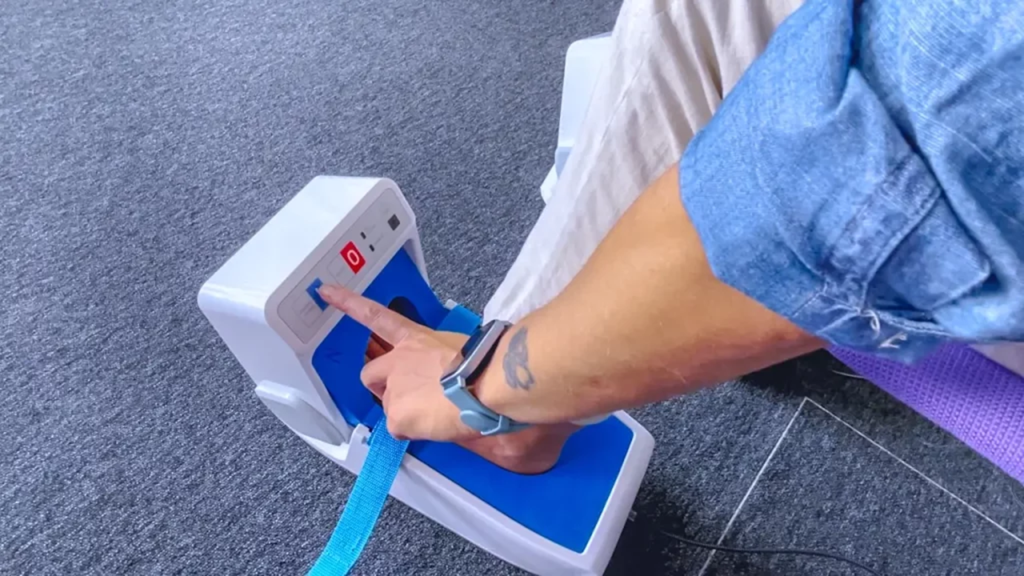
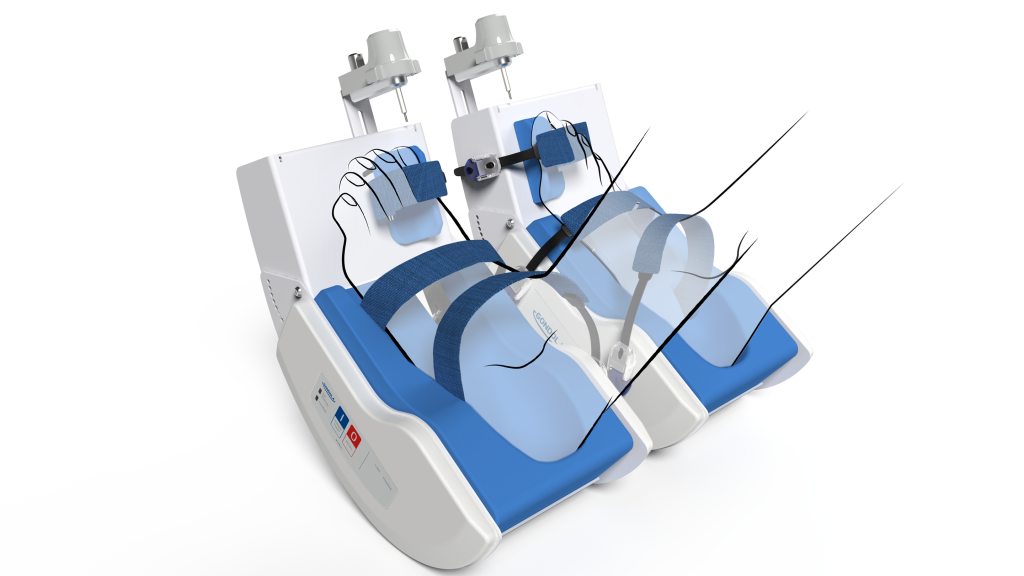
At its core, our device stimulates four specific points under the patient’s feet—on the big toe and the first metatarsal joint. The treatment takes less than two minutes and can significantly improve motor control, restoring balance and walking function for up to three days. With regular use, many patients experience long-term benefits. Current standard treatments for Parkinson’s disease are mainly based on pharmacological solutions or involve highly invasive procedures like Deep Brain Stimulation (DBS). So far, there is no other device on the market that delivers the kind of benefits we provide in a fast and non-invasive way. However, adoption isn’t easy. Neurologists tend to trust the typical pharmacological or surgical solutions, and our approach is neither. This means we continuously invest in clinical studies to further prove its efficacy.
Who are your customers, and how do they use your product?
We offer two versions of the Gondola device. The professional version is used in partner clinics and rehabilitation centres to test whether a patient responds positively to the treatment. If the outcome is promising, the patient can then purchase a customised home-use device, which is 3D-fitted to their feet to ensure maximum precision and comfort. While both versions deliver the same therapy, the home-use device empowers patients to manage their treatment independently.
You didn’t come from a life sciences background, how did you manage that transition?
My background is in business and economics, not in medicine or biomedical engineering. However, I became truly passionate about the problem we were trying to solve, and that made all the difference. I studied everything I could about Parkinson’s disease, regulatory requirements, and medical device compliance, learning how to interact confidently with neurologists and healthcare professionals.
What are the next milestones?
In the short term, our main goals include raising additional funds, obtaining reimbursement approval, and hiring a new member of the team to support our growth. In the long term, although we’ve already published several scientific studies, we are committed to building even more evidence to ensure our therapy can reach and benefit as many patients as possible.
3 quick questions to wrap it up:
- What’s the hardest part of being an entrepreneur? Financial uncertainty and the constant need for resilience.
- How do you recharge your batteries? I spend time on my hobbies and surround myself with friends and family.
- Where do you see yourself in 10 years? Building the next company or sharing what I have learned to help other entrepreneurs avoid my mistakes.