Startup Story #23 - GR3N
USI Startup Centre
14 April 2025
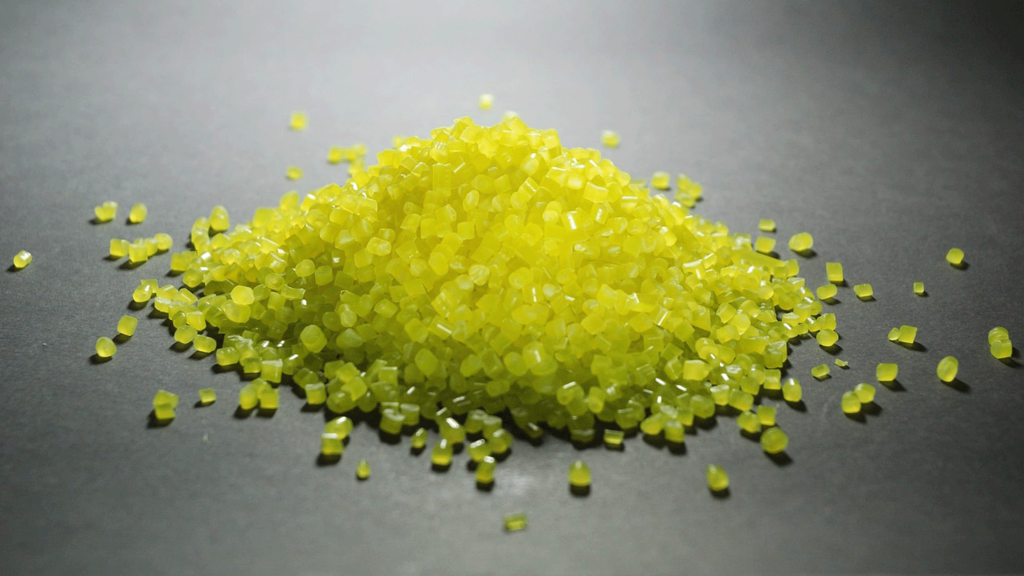
Plastic materials, especially in complex forms like multilayer products, present a major challenge for recyclability due to contamination and additives. GR3N, a Ticino-based startup, is tackling this issue with its patented MADE (Microwave Assisted DEpolymerization) technology, which breaks down plastic waste into its fundamental components, without affecting the quality. The resulting polymer is no longer recycled PET, but new materials from recycled monomers. In this brief interview, Maurizio Crippa, CEO and Co-Founder, shares insights into the company’s journey and the challenges of scaling to industrialisation.
How did GR3N come to life?
It all began over a decade ago. At the time, I was a researcher at the University of Milan, spending large part of my time in the lab doing reactions and purifications. One day, after reflecting on the issue of non-recyclable plastic trays, we randomly came up with the idea of doing depolymerization of polyester using microwave-assisted processes, a solution capable of overcoming the economic hurdle that had so far blocked the adoption of new technologies in the field. After months of laboratory testing, and some challenges within the founding team, we incorporated the company in Switzerland, joined the USI Startup Centre (then CP Start-Up) and started developing the technology.
What have been the most important milestones in GR3N’s journey so far?
Scaling up a chemical process from the lab to full industrial scale is a long and complex journey, especially in the field of industrial chemistry, indeed one of our first key milestones was developing a proof-of-concept using basic lab experiments and second-hand components. Then, we obtained a couple of EU grants which enabled us to build our first demo plant and subsequently complete the pre-industrial plant, now fully operational. Most recently, we finalized the basic engineering for our first full-scale industrial plant, which will be built in Spain in partnership with our industrial investor, Intecsa Industrial.
You mentioned the importance of European funding. How critical was that support?
European funds were essential, without them, none of this would have been possible. In the early stages, the risk was too high for private investors, and public support gave us the opportunity to build, test, and refine our technology, allowing us to later approach investors with a working demo and a solid track record.
What’s unique about your recycling technology compared to traditional methods?
The key difference is that most of the companies out there are working on mechanical recycling that can only work with clean, uncontaminated polymers and not on materials like textiles or coloured plastics, while we are doing chemical recycling. With our proprietary MADE (Microwave Assisted DEpolymerization) Technology, based on a microwave-assisted depolymerization process, we break down any type of PET and polyester plastic into its two core components (PTA and MEG monomers) that can then be re-assembled to obtain virgin-like plastics. This opens the door to recycling other materials like polyester textiles, which represent around 66% of the market.
Who are your customers, and how do you bring your technology to market?
In bringing our solution to market, we are also supported by a strong EPC (Engineering, Procurement, and Construction) partner, who became a strategic investor and has been enormously helpful in bridging the gap toward industrialisation. Regarding our customers, we work with industrial partners who want to purchase and operate a plant using our technology, following a licensing model that includes not only the rights to use the technology but also the microwave reactor components and the basic engineering package to ensure successful implementation.
3 quick questions to wrap it up:
- What’s your favourite way to recharge? – Enjoy the mountains with my family.
- What is your approach to hire another member of your team? – Right now, is mostly based on competencies, the rest is gut feeling.
- What’s your dream? - My dream is my life, I’m living it. Every day is a step toward making that dream real.